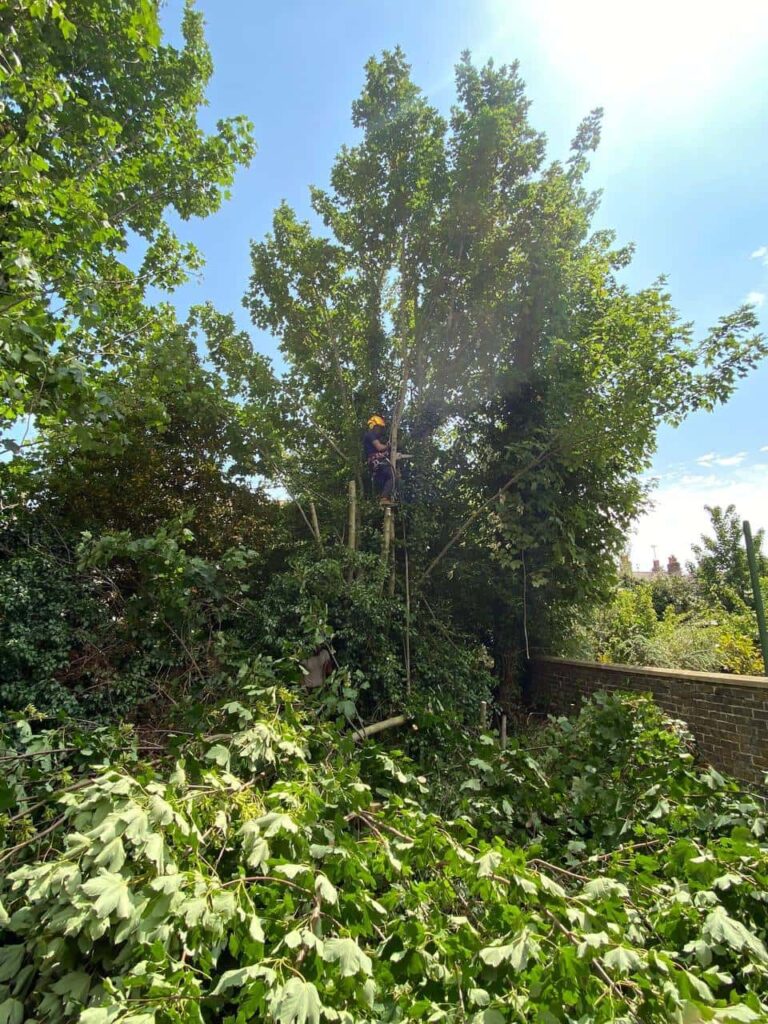
An overgrown tree is not necessarily unhealthy. A large, dense crown may simply reflect natural growth. However, when branches become overcrowded, damaged or poorly positioned, selective maintenance can improve the tree’s structure and help it continue developing successfully.
Professional tree cutting, pruning and trimming allow property owners in Ely, Cambridge, to manage excessive growth without removing more foliage than necessary. The work should be based on the tree’s species, age, condition and surroundings rather than appearance alone.
How Careful Tree Maintenance Supports Healthy Growth
Tree cutting is a broad term covering the removal of branches or sections of growth. Pruning is usually more selective and focuses on health, structure or clearance. Trimming often involves managing smaller outer growth to maintain the tree’s shape or prevent branches from obstructing nearby features.
These methods can benefit an overgrown tree when they are carried out for a clear reason and with an understanding of how the tree is likely to respond.
Removing Dead and Damaged Branches
Dead branches no longer support the tree’s development and can gradually weaken. Damaged limbs may also contain splits, broken sections or exposed wood that continues to deteriorate.
Pruning these branches back to an appropriate point helps retain the stronger parts of the crown. It also makes the tree easier to inspect because defective growth is no longer concealed within dense foliage.
The aim is not to remove every imperfect branch, but to address growth that has no useful structural role or may create future problems.
Reducing Crossing and Rubbing Growth
Overgrown crowns frequently contain branches that cross or rub against one another. Repeated movement can wear away bark, creating wounds and weakening the affected limbs.
Selective pruning removes the less suitable branch while retaining the one that contributes more effectively to the tree’s structure. Addressing this growth before the branches become large can limit the size of the pruning cuts required.
Improving the Distribution of Branches
A crowded crown may contain several branches competing for the same space. Some can become suppressed, twisted or forced into weak positions as the tree continues growing.
Careful thinning can improve branch distribution without significantly changing the tree’s overall size. This involves removing selected growth throughout the crown rather than cutting only around its outer edge.
The finished tree should retain a balanced canopy with sufficient healthy foliage to support normal growth.
Managing Long and Heavy Limbs
Branches that extend a considerable distance from the trunk place increasing leverage on their attachment points. This may be particularly concerning when a limb has a weak union, carries substantial foliage or has developed unevenly.
Selective reduction can shorten an overextended branch while retaining suitable secondary growth. This may improve balance and reduce strain without requiring the entire limb to be removed.
The cuts need to be positioned correctly so the remaining branch continues to form a natural part of the crown.
Providing Clearance Without Excessive Cutting
Overgrown branches may begin reaching towards roofs, walls, windows, paths or other garden features. They can also restrict access and dominate smaller outdoor spaces.
Professional trimming or pruning can establish appropriate clearance while preserving the tree’s natural form. Completing this work before branches become extremely large usually allows for a more proportionate approach.
Removing too much growth at once can stress the tree and encourage dense, weakly attached shoots. Effective maintenance therefore concentrates on the minimum work needed to achieve the intended result.
Correcting Weak Regrowth From Previous Work
Trees that have previously been cut too severely may produce clusters of fast-growing shoots. This regrowth can quickly make the crown look dense again, but the new stems may be weakly attached.
Repeatedly cutting all the shoots back to the same points can create an ongoing cycle of vigorous regrowth. A professional tree surgeon can assess which shoots should be retained, shortened or removed to encourage a better branch structure.
This improvement may need to be completed gradually rather than through one extensive pruning session.
Helping the Tree Remain Manageable
Regular, moderate pruning is generally preferable to allowing a tree to become heavily overgrown and then removing large quantities of growth. Smaller, well-positioned cuts tend to have less impact on the tree and provide greater control over its future development.
Signs that an overgrown tree may benefit from assessment include:
- Deadwood accumulating within the crown
- Branches crossing or rubbing together
- Limbs extending heavily towards one side
- Growth obstructing buildings or access routes
- A dense network of weak shoots
- Visible splits or poorly formed unions
- Branches becoming too large for their surroundings
- Previous pruning points producing repeated regrowth
These signs do not automatically mean that extensive work is needed. Selective pruning may be enough to resolve the concern.
Why Professional Assessment Matters
Different tree species respond differently to pruning, and the correct timing can vary according to the work required. The condition of the trunk, main unions and root area should also be considered before deciding how much growth to remove.
A professional assessment distinguishes healthy natural growth from genuine structural or maintenance concerns. It also ensures that pruning recommendations are proportionate and designed around the long-term condition of the tree.
Conclusion
Tree cutting, pruning and trimming can improve an overgrown tree by removing dead or damaged branches, reducing crossing growth, improving structural balance and maintaining suitable clearance. The greatest benefit comes from selective work that preserves healthy foliage and respects the tree’s natural form.
Ely Tree Surgeons provides professional tree pruning and maintenance throughout Ely, Cambridge. If an overgrown tree has become difficult to manage, contact us to arrange an assessment and receive practical guidance on the most suitable work.
Call us on: 01353 880 893
Click here to find out more about Ely Tree Surgeons
Click here to complete our contact form and see how we can help with your tree needs.